


Custom software
How much does custom software cost, and what sets the price?
Custom software costs the time of the people who build it, plus what it takes to run it afterward. The price moves with five things: how much the software has to do, how many platforms it runs on, what it connects to, which rules it must meet and how certain the plan is when you ask for a quote.
Written by Anıl Kölmük7 min read
Why can’t anyone quote a price from one sentence?
Because the same sentence describes very different projects. “A booking app” can be a form that writes to a shared calendar, or a marketplace with payments, reviews, refunds, staff schedules and apps for two phone platforms. Early in a project, nobody knows yet which one you need, and that often includes you.
Software estimators call this the cone of uncertainty: before requirements are written, an estimate can miss by a factor of four either way, and the spread shrinks as decisions get made. A serious quote either narrows the scope first or tells you plainly how wide its range is.
What is the basic formula?
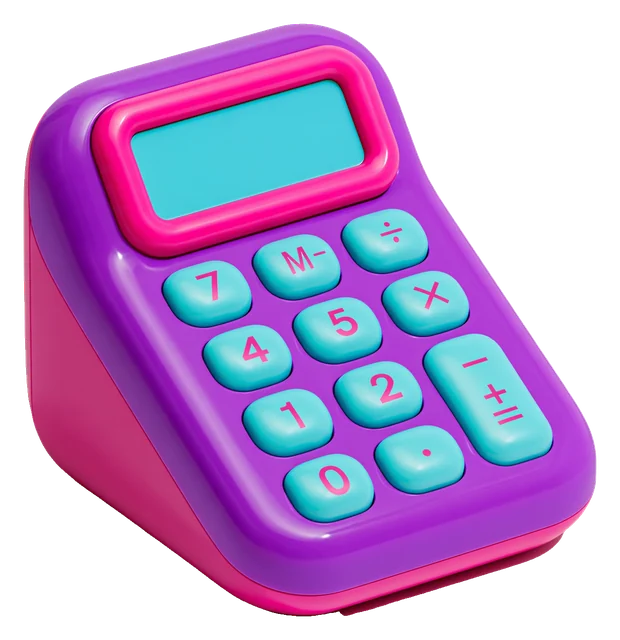
Almost every quote comes down to the same sum: people × time × rate, plus the costs that keep the software running once it is live.
A worked example with round numbers: a designer and two developers working for ten weeks is 3 × 10 × 40 = 1,200 hours. Multiply those hours by the rate in the quote and you have the build cost. Cut the scope in half and the weeks drop with it. Add a second phone platform and they grow.
| Driver | Keeps the cost down | Pushes the cost up |
|---|---|---|
| Scope | One clear job, few user roles | Many features, roles and special cases |
| Platforms | One web app that also works on phones | Separate iOS and Android apps next to the web |
| Integrations | None, or one well-documented API | Old systems, thin documentation, many partners |
| Design | A proven component library | Custom interactions and new patterns |
| Data | Starting fresh | Moving years of messy records |
| Rules | An internal tool for a small team | Consumer payments, health data, accessibility duties |
| Certainty | Scope agreed in writing before the build | Requirements that keep changing during the build |
Which features make software expensive?
Most budgets grow in a handful of places that look small on a wish list:
- User roles and permissions: every new kind of user multiplies the screens, the rules and the tests.
- Payments: refunds, failed cards, invoices, taxes and receipts are each a feature of their own.
- Integrations: connecting to an accounting tool, a warehouse system or a partner’s API often takes longer than building the screens. Our API integration page explains why.
- Offline use and sync: apps that keep working without a connection need rules for conflicting changes.
- Reporting: dashboards that combine several data sources need clean, matching data first.
- Search, notifications, file uploads and admin panels: each is routine, and each still takes days rather than hours.
Which rules add cost in Europe?
Two laws touch almost every project in the EU. The GDPR asks for data protection by design and by default (Article 25), which means deciding early what personal data you keep, where you keep it and for how long. Done at the start, this costs little. Added at the end, it can mean rebuilding parts of the system.
Since 28 June 2025, the European Accessibility Act has applied to many consumer services, including online shops, booking platforms and banking apps. Only the smallest businesses, with fewer than 10 staff and turnover of no more than €2 million, are exempt for services. Everyone else has to make these services accessible and publish an accessibility statement. Accessibility built in from the first screen costs far less than a retrofit.
What does software cost after launch?
The build is the first bill, not the last. Hosting, monitoring, backups, security updates, app store accounts and support continue for as long as the software is used. Some of these are small and fixed: Apple charges 99 USD per year for its developer program, and Google Play charges a one-time registration fee of 25 USD. Others grow with your users, such as cloud hosting and per-use fees for outside services like maps, email or AI models.
The larger cost is change. Research summed up in Wikipedia’s article on software maintenance puts maintenance at most of a system’s lifetime cost, and most of that is new features and improvements rather than bug fixes. Plan for a team that keeps working on the software after launch, not only for the launch.
Ask for this in every quote
The running costs for the first year, split into fixed fees, usage-based fees and the team time for updates.
What should a good quote include?
A quote is only comparable when it says what it covers. Before you compare totals, check that each one lists:
- The scope: the features in, and just as clearly, the features out.
- The assumptions: which systems exist already, who supplies content and data, which devices and browsers are supported.
- The team: roles, how many people and their rates or the blended rate.
- The phases: what you receive when each one ends, and when you can try it.
- Testing and handover: automated tests, documentation and who deploys to production.
- Running costs: hosting, licenses, app store accounts and the time needed for updates in the first year.
- Ownership: whose name the code, the data and the accounts are in, put in writing.
Why do cheap quotes often end up expensive?
A low number usually means something has been left out, not that the work is easier. The gaps tend to be the same: testing that was never priced, integrations assumed to be simple, data migration missing, and change requests charged at a premium once the project is under way. Another quiet cost is lock-in. If the code, the hosting and the domain sit in the supplier’s accounts, switching later means paying twice. Ask what happens when something changes, and get the answer in writing before you compare prices.
Fixed price or time and materials?
A fixed price suits a small scope that is written down. The supplier takes on the risk of running over and prices that risk in. Time and materials works when the product will change as you learn: you pay for the hours used and can change priorities every week. Many projects mix the two: a short, fixed-price discovery phase that ends in a written scope, then either a fixed price per phase or a monthly team.
Whichever model you choose, ask how changes are handled. A change process that is clear on day one prevents most arguments on day sixty.
How can you lower the cost without cutting quality?
- Start with an MVP: the smallest build that tests the assumption most likely to be wrong. See MVP development.
- Rent what is not your edge: payments, email, login and maps are services you subscribe to, not build.
- Choose one platform first: a responsive web app often comes before native phone apps.
- Write the scope down: one page that lists what is in and what waits saves weeks of rework.
- Decide quickly: a team waiting for answers is a team you pay to wait.
- Own the code and accounts from day one, so you can change suppliers later without starting over.
The cheapest feature is the one you decide not to build yet. The costliest requirement is the one no one put on paper.
If you have a project in mind, our custom software page explains how we scope it, and includes a short build-or-buy check you can run before you ask anyone for a quote.

Written by Anıl Kölmük
Founder of yop, Tallinn. Who we are
Sources
- Wikipedia: Cone of Uncertainty
- EUR-Lex: General Data Protection Regulation (EU) 2016/679, Article 25
- Business.gov.nl: European Accessibility Act for products and services
- Bird & Bird: A guide to navigating the European Accessibility Act for online retailers, service providers and platforms
- Apple Developer: Enrollment
- Google Play Console Help: Get started with Play Console
- Wikipedia: Software maintenance
Where we can help
The services behind this post.
Custom software development
Software built around how your company already works.
MVP development
The smallest real product that paying users can try.
SaaS development
Subscription products with accounts, plans and billing.
API integration
Your website, apps and services talking to each other.
Your project
Want this done for your company?
Send your site and what you want to change. We reply within two working days with the first thing we would do.
- From
- you@your-company.com
- To
 Anıl or Hatice
- Send
- Send your site and what you want to change.
- Reply
- Within two working days
Questions
Asked about custom software.
How long does it take to build custom software?
How long does it take to build custom software?
A focused first version often takes a few months, and larger products are built in phases over a year or more. The scope, the number of platforms and how quickly decisions are made matter more than the size of the team.
Is custom software cheaper than off-the-shelf software?
At the start, buying is almost always cheaper. Custom software pays off when ready-made tools force costly workarounds, when license fees grow with every user, or when the software itself is the product you sell.
Why can quotes for one idea be so far apart?
Each supplier imagines a slightly different scope, works at a different rate and carries a different amount of risk in a fixed price. Ask every supplier to list what is included, what is not and what the running costs will be.
Who owns the code when the project ends?
The contract decides that, so read it before signing. At yop the client owns the code, the data, the domains and the accounts from the start.